
Category: Interviews

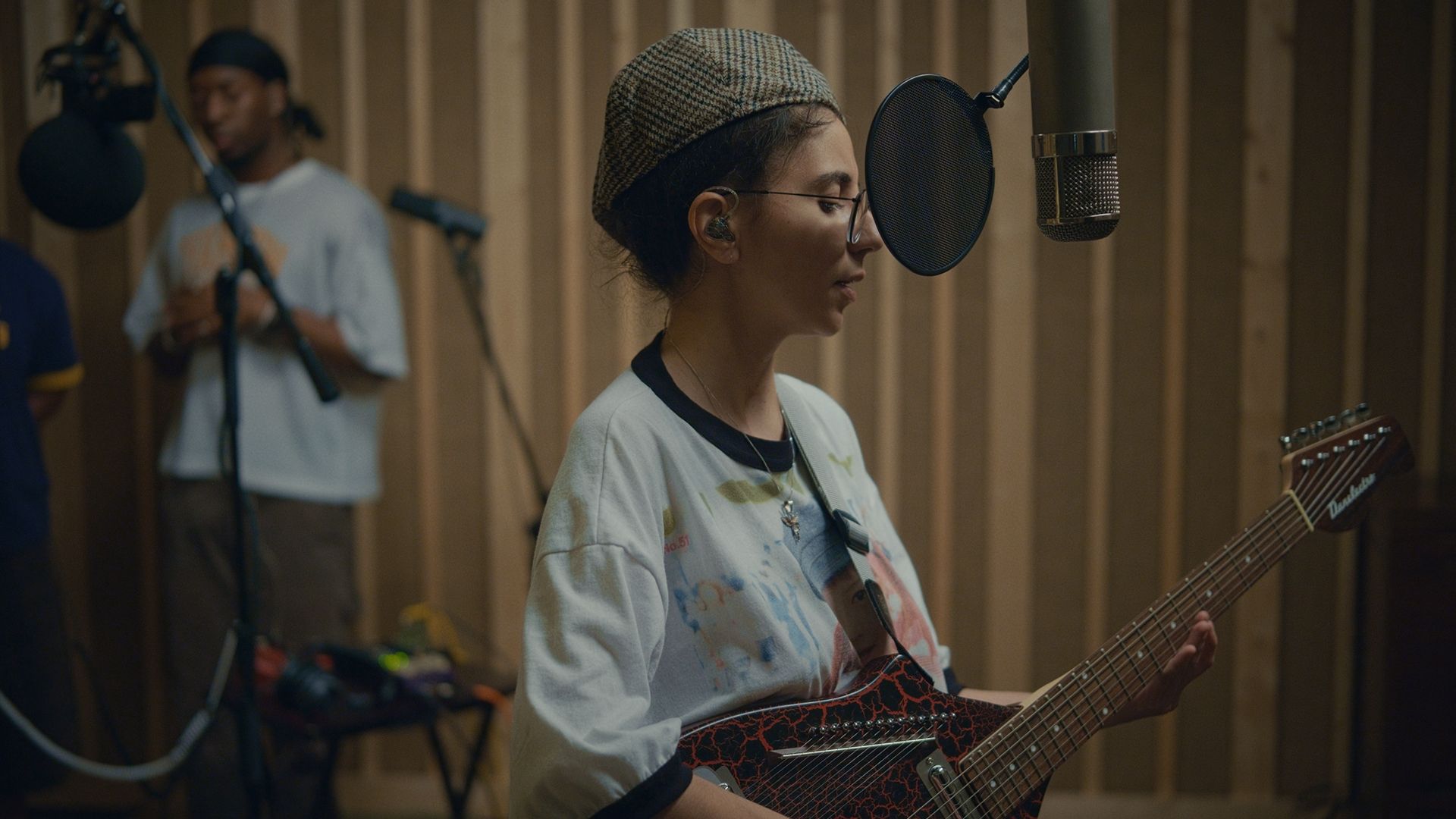
  • St Panther on the spirit behind ‘Strange World’: “It needed to exist”

    St Panther on the spirit behind ‘Strange World’: “It needed to exist”

    From communication to world events to the music’s emotional pull, St Panther shares how their new genre-blurring EP channels something bigger than themselves.

    Stepping into a conversation with St Panther feels a lot like stepping into their new EP, ‘Strange World’—warm, intuitive, and instantly familiar, as if you’ve been invited into a space you didn’t realise you’d been missing. Before the formal questions even begin, our exchange is full of laughter, gratitude, and the kind of mutual recognition that can only occur between two people who truly see each other’s work. It’s from that place of openness that St Panther begins to unravel the spirit behind ‘Strange World’, a project that blurs genre, honours lineage, and channels something bigger than the artist themself. What follows is a conversation about creativity, communication, community, and the quiet power of music that feels destined—music that feels, as they put it, like it “needs to exist right now”.

    Richardine: So, I had a chance to listen to your fantastic album.

    St Panther: Thank you so much.

    Richardine: Oh, my God. Well, EP, but it feels like an album to me.

    St Panther: Yeah, it’s the sequence.

    Richardine: Exactly, like, it’s… Okay, because you know there’s other music out there, and people don’t quite give me the same feel that you give me. So, I’m just like, yeah, I’m going to ask questions about that feel.

    St Panther: Absolutely.

    Richardine: Okay, let me just open this up.

    St Panther: I’m ready.

    Richardine: Okay, cool, cool, cool. Come on, where ya at?

    St Panther: I gotta say thank you also, kind of, for all of the support before we even got this rolling. When I was fully back here, balls out independent.

    Richardine: (Laughs) Absolutely!

    St Panther: And I really, really saw that and appreciated that.

    Richardine: Yes, yes, of course.

    St Panther: And my immigrant parents, too. They were like, “What, you’re in that little archive?” They were tripping.

    Richardine: For real?!

    St Panther: They were so happy. Like, they were so proud of that moment, so I had to just thank you. That was really nice.

    Richardine: Absolutely! I’m like, “Come on now, we’ll be gone one day, but the people need to see (that we were here—that we lived).

    St Panther: Yeah, we’re building it slowing, you know?

    Richardine: Absolutely. Oh, my gosh. That warms my heart. Say hello to your parents for me.

    St Panther: I will. I’m gonna tell my mom. She’s gonna be so happy.

    Richardine: Okay, okay. Well, how would you describe the feelings that come over you when you’re creating music?

    St Panther: Oh, my gosh. Just I really get lost in process. So that can mean anything from what I’m feeling that day. I feel like I just get excited to get down and start working. So the music starts happening.

    Richardine: Yeah.

    St Panther: And that’s the most motivating thing. Like, I just get inspiration off of the music, so I just feel inspired. Really.

    Richardine: Okay. And when you’re in that mode, do you think you’re at your best, like, as far as conveying a message to others in those moments?

    St Panther: Yeah, I try to show up to the thing clear-minded and, you know, having an intention when I’m sitting down to create something,

    Richardine: Yeah.

    St Panther: So that’s kind of the way I try to aim to show up.

    Richardine: Okay, cool. And would you say in your daily life, you’re a great communicator?

    St Panther: Yes, I think so. I might overcommunicate too, which is kind of a characteristic of my music. I’m kind of starting to notice.

    Richardine: (Laughter) Okay, cool. I asked that because I find that some artists, like, they’re better communicators when it’s in song.

    St Panther: Yeah.

    Richardine: And then, like, when it comes to like personal life, they get kind of like jammed up, or they’re not as confident.

    St Panther: I will say yes, you brought up a good point for like the more intimate things that are hard to talk to someone about…

    Richardine: Okay.

    St Panther: I think a lot of musicians go to their songs. And that’s what I do too.

    Richardine: Okay.

    St Panher: You know?

    Richardine: Okay. Okay. How would you say your friends or a spouse would describe your communication style?

    St Panther: Oh, my God. Well, right now, I’m spouseless out here, y’all.

    Richardine: (Laughter)

    St Panther: My friends are my spouses. All 500 of my spouses would say that my communication style is very open.

    Richardine: Okay.

    St Panther: It’s inclusive, allows for a lot of perspectives to live. I’m a Libra, so I’m very diplomatic and the way that I communicate and consider others.

    Richardine: Yes.

    St Panther: That’s really the tea.

    Richardine: Okay. Okay. Very nice. See, and even the way you answered those questions, I didn’t have to, like, sift, or like, nudge you on.

    St Panther: Thank you.

    Richardine: And would you say that your communications style has changed because of the apps, or are you more of a person that would like, go out and go link someone? Or do you call them on the phone?

    St Panther: I feel like I’m not on, you mean, like, just apps, like, dating apps or, like, social media, period?

    Richardine: Well, just like social, like, what, what do you prefer? Like, are you more of the person that will, like, pick up the phone and call…

    St Panther: Yeah.

    Richardine: Or do you find yourself doing more of like the Instagram, like texting?

    St Panther: I think I’m on FaceTime alot more often now. My kind of communication has kind of changed in that sense that you get, you kind of just love to get on a call with someone.

    Richardine: Okay.

    St Panther: Don’t do the texting as often these days.

    Richardine: Okay. Very nice. And which group of people would you say you call the most?

    St Panther: Oh my God. We have this like group chat in my phone called the “Tranny Mob” and it’s literally like, all my trans friends in like one group chat.

    Richardine: (Laughter)

    St Panther: And like, we’ll talk very often. Like, we just give each other life updates, dating updates, what’s going on. Well, we work together musically as well.

    Richardine: Fire.

    St Panther: So, one of the artists is named Wish. And we’re always in communication for their music as well. So, I mean, like, purely that, we’re active.

    Richardine: Okay. See, that was definitely one of my questions, too. So I wanted to know, like, how did you meet your band?

    St Panther: My band is a new band, so I kind of have known all these guys in a different way, different moments of life. Nico, my current drummer, he is someone that I met back in my hometown. Kind of like in Santa Ana in the DIY Indie scene.

    Richardine: Okay.

    St Panther: And he was part of this, like, really cool Jazz trio, and arguably, not to shade anybody, but at the time, I was thinking, there’s really only going to be a few artists making it out of this, what we have right here.

    Richardine: Okay.

    St Panther: And I heard him playing and was like, he’s definitely going to be one of them. And then soon after, he went on to back up Steve Lacey as a drummer.

    Richardine: Wow!

    St Panther: He’s amazing. And has just, he’s been out here grinding on the scene as a Jazz musician. So he’s my current drummer. I met him. 2014-ish in passing. We never even really talked but were friends back then.

    Richardine: Wow.

    St Panther: I kept seeing around the scene recently. So I was like, this is a strange reconnection. So I just kind of hit him up and was like, dude, we should, like, finally get together and jam and it went well.

    Richardine: Yeah.

    St Panther: And then my current guitarist is an amazing artist that I’ve also known for some years, Jasper Bones is what he goes by. He’s an incredible songwriter, producer, makes his own music, but I’ve always kind of just, we supported each other in the scene the last, I would say, like five plus years of knowing each other’s music.

    Richardine: Nice.

    St Panther: And he’s really great. And then Chap says another member of my band. He’s a guitar player, bass player. He’s my current bass player, but he is just an incredible artist as well.

    Richardine: Nice.

    St Panther: He has his own music. He’s from Long Beach. So, I met him kind of as a group of these like R&B cats that are, they play together with like the Free Nationals.

    Richardine: Oh!

    St Panther: Some of this band is like backing up Cuco.

    Richardine: Nice.

    St Panther: So these cats all have their own scene, kind of in Long Beach. Like they have this lockout with like the Brain Story guys, like all these different bands are kind of just recording in this place.

    Richardine: Yeah.

    St Panther: So, I met them. You know, they were fans of my music and tapped in, and we all became really for friends too, because we make the sick stuff.

    Richardine: Fantastic, fantastic!

    St Panther: Yeah.

    Richardine: Yes. Speaking of which, like, if someone is listening to your music and maybe they’re, they’re more so—maybe they’re not music industry people or don’t necessarily know how to, like, I guess, describe it as far as genre goes. Like, how would you describe your music?

    St Panther: Oh, my God. I think I’m figuring it out. It’s a genre-expansive kind of because it exists on playlists on the editorial playlist, like borderless, like POLLEN. The projects that we can’t exactly put a genre name on, but I will say it started in an Alternative place. I was like an indie band person, mostly and then kind of moved into soul, R&B, Hip-Hop, that kind of conjumbled into like Electronic and Funk elements and House elements. So I really would say it’s like an Alt R&B mixed with Indie Pop situation, you know?

    Richardine: Okay. Okay. I think that’s fair.

    St Panther: Yeah.

    Richardine: Diving into your new project, there’s this feeling that I get when I listen to your music, especially when playing ‘Strange World’, ‘The Deal’, and ‘Whoever Said Silence is Peace’. Like, I don’t know that I have the words to, like, fully describe it yet, because I’ve been thinking about it and I’m just like, how am I going to tell St Panther, like, what I’m feeling when I’m listening to it, but it feels like…

    St Panther: I’m really curious to know. This is an interesting group of songs.

    Richardine: Yes, it just it feels like familiar, like home like, but it feels right. It feels like it’s supposed to exist, like, and I was supposed to discover it, and it was supposed to happen when it happened. I don’t know if there is a word specifically that encompasses that, but like it feels familiar. Like, it feels right. There’s nothing wrong about it.

    St Panther: Thank you so much.

    Richardine: Yeah, the other artist that I would say I kind of have that similar thought or like connection to is like Syd from The Internet. And it’s, I think it’s like big, like a band, like full sounds. It’s just really beautiful. So kudos to you.

    St Panther: Thank you so much. It’s funny that you were like that energy because I’ve always felt, since I was little, not sure why I was given this gift. I’m on a journey. A lot of different people are looking into it from the outside. Like, it doesn’t seem like this person wants stardom or to be the biggest person in the room. I have felt similar, and I’m letting that journey lead me through the music, really. So it feels similar that I, with this same group of songs like I’m working on right now, some spirit is living in it that is telling me it needs to exist right now.

    Richardine: Yes.

    St Panther: I’m just a vehicle for it.

    Richardine: Yes.

    St Panther: And it might be a vehicle for people that look like me. I’m not sure exactly what it’s going to exist as.

    Richardine: Yeah.

    St Panther: But just like a necessary perspective. So I appreciate that a lot.

    Richardine: Absolutely. That is exactly what it feels like. So you nailed that, for sure.

    St Panther: Yes.

    Richardine: Oh my goodness. When I listened to the EP, I was reminded of Erykah Badu, D’Angelo, and your compositions are incredible. Like, would you say that those artists are artists that you kind of feel like you have a similar spirit to when it comes to music and like creating?

    St Panther: Yeah, and I think really the world, like, the way I hear Erykah Badu talking about the world and how she sees things for this current time. I really identify with a lot of the things she says and how she treats music as such a sacred gift. D’Angelo did too.

    Richardine: Yeah.

    St Panther: I think all of us kind of have that coming thread. I was reading a lot of the Sly Stone biography. When I was making some of this music, and similarly, I think I go to voices like Stevie Wonder, people that really are plugged into a world channel, you know?

    Richardine: Yes.

    St Panther: I think I’m there, too, since I was a little kid.

    Richardine: Nice. Jeez. So, wait, so how long have you been making music?

    St Panther: I think I wrote my first song. I want to say it was like 2004. My mom told me when I got home from school, it was like, I remember seeing the tsunami that happened in Indonesia on the news.

    Richardine: Yeah.

    St Panther: And my mom was really feeling it and talking about it with my dad. And I, for some reason, internalised kind of just this really deep feeling of sadness that I’m sure their community was feeling, which is the loss of life and structures and culture, and it was I just immediately wrote a song making like a metaphor for water and how water is life, but also death for these people.

    Richardine: Wow.

    St Panther: And yeah, that was like the first woman I think I had a moment of, “Oh, that’s what writing music is.”

    Richardine: Wow.

    St Panther: Yeah. So I was probably like 10, but I started playing instruments at like four.

    Richardine: Wow. You are music.

    St Panther: I saw my dad play a lot of piano growing up, too. He’s a pianist.

    Richardine: Oh, nice. Okay.

    St Panther: I just had that at home, yeah.

    Richardine: Okay. Maybe, maybe that’s what it is, because, like, that’s what I’m saying. Like, it feels like… I don’t know. Like, it’s supposed to be there. Like, you are it, if that makes any sense.

    St Panther: I’ve lived and breathed music since I was little. I mean, my dad did too, and it wasn’t like for a career. He’s a painter, but I’ve just always lived in like the ether of art between my family, you know?

    Richardine: Beautiful. Beautiful. Beautiful. And so, how did the title for your last track, ‘Whoever Said Silence is Peace’, come about?

    St Panther: That song was originally about a relationship that had just ended. And there was a very deep silence between us that was, I think, impactful for both of us on both sides.

    Richardine: Okay.

    St Panther: And it was interesting. I’ve written a lot of songs that start that way about a particular experience, and then it gains different contexts, and then, you know, we had October 7th happen, and all these different genocides around us are now unfolding. I really reconextualise the song as like, there was this deep silence too in our communities at some point when all of this was unfolding, I think even still now.

    Richardine: Yes.

    St Panther: There’s a lot of people still trying to prompt each other to talk about these things. So that, for me, became more of the message of the song than anything. Silence, period.

    Richardine: Yes.

    St Panther: It just silence can be so loud.

    Richardine: Yes.

    St Panther: You know, so many different situations in life. So I think I’m speaking to—we have a ghosting culture that has just arrived with new technology too. I think the ability to put things down is good. And then, also can sometimes come at a price. So I wanted to shed some light, I think, on silence as a concept, you know?

    Richardine: Yeah. Very nice. Very nice. Very nice. Thank you for that full answer.

    St Panther: Yes, of course. Of course.

    Richardine: I appreciate that. And speaking of what’s going on in the world now, like, how are you feeling about it? like. How is it making you feel, and how do you feel about it?

    St Panther: Feel because I’ve always been someone that has been aware of other countries, other cultures. My parents really taught me to be so grateful of where I geographically am at.

    Richardine: Yeah.

    St Panther: So I do have a pit in my heart. I think I have had a pit in my heart for the last two years, just seeing so much media of so much suffering globally.

    Richardine: Yes.

    St Panther: From Sudan to Congo to here, I think there’s just so many places one can tune in.

    Richardine: Yeah.

    St Panther: And just, you know, feel so much pain, and for me, it really came through seeing what was unfolding in Palestine and having now relationships with people there.

    Richardine: Yeah.

    St Panther: So I do feel moments of, you know, just existential dread, but then moments like yesterday, where we have a positive outlook for New York. I don’t know if you know what happened in New York.

    Richardine: Yes, I voted for him! I’m going to say it.

    St Panther: That’s beautiful. See, it’s these small glimpses of the future we’re all hoping for and trying to build. I think it goes beyond politicians. I think it’s really our communities, and it’s serious and small, as if you want to change the world, change yourself and how you show up in the world.

    Richardine: Yes.

    St Panther: So I do feel hopeful. I see a lot of people really stepping up to that, which is there’s going to always be a mix, you know?

    Richardine: Yes, yes, yes. It’s heavy stuff. It’s heavy.

    St Panther: Yeah.

    Richardine: How do you know when a project is completed?

    St Panther: I think it has its own legs and its own soul, like it doesn’t need any more of you, you know?

    Richardine: Okay.

    St Panther: Or any more of anyone. I think it just tells you in that moment when you hear it’s done. You know?

    Richardine: Okay. Yeah, you’re different. You are so different. (Laughs)

    St Panther: Because I feel like once it becomes everyone else’s. I think that’s the moment, you know?

    Richardine: Nice, because some people are like, “Oh, my manager had to tell me to stop.” You’re different. You’re definitely different.

    St Panther: Thank you.

    Richardine: You are.

    St Panther: Music that exists for other people, music like this, it’s theirs from the moment it’s made, but I think too, that’s just the only way to know is when you start playing it for other people’s sure, and then they say, you know, they already have it complete in their mind. They’re like, what else could happen? You know?

    Richardine: Yes.

    St Panther: Okay.

    Richardine: And my last one for you, um, I don’t feel like you’re somebody who would say, um, you know, I want my listeners to take this specific thing from a project that I make, but if there is, yeah, if there is anything that you would like to highlight and you wouldn’t want people to miss, what would that be?

    St Panther: That’s a good question. I feel like I wouldn’t want people to miss maybe the feelings it starts stirring in them. Some of the first messages I get when I put a project out is, “It feels familiar. It feels like some feeling that I’ve felt before many years ago”, and I’m like, “I think that feeling is called empathy.” So don’t you worry about making sense of it. I’m glad you’re feeling it, and that is, you know, that’s all I could ask for. So, you know, when you get those feelings, and they arrive, embrace them. That’s all I want to say.

    Richardine: Nice. Very nice. Thank you so much.

    St Panther: Thank you.

    Richardine: Thank you, thank you. Yes, I’m going to write this up, get this together quickly. And congratulations. Yes, congratulations, congratulations, congratulations. You were everything.

    St Panther: Congratulations to you, too. Thank you.


  • Fashion, the artist behind ‘New York Talk’, speaks on style, sound, and self-invention (Interview)

    In this wide-ranging interview, the genre-defying talent unpacks New York nostalgia, the legacy of style icons, and how fashion, music, and identity collide.

    [media-credit name=”Courtesy” width=662 align=”center”][/media-credit]

    In a city where sound and style are synonymous, few artists embody that duality quite like Fashion. Her latest track, ‘New York Talk’, is a pulsating love letter to the city that raised her—fast-paced, distinct, and endlessly cool. But beyond the music, Fashion is a storyteller: Through what she wears, what she says, and what she dares to create. We caught up with the multifaceted artist to talk about her collaboration with Studdah Man, the deeper meaning behind her moniker, and what makes the New York experience so unshakably hers. From Anna Wintour’s exit at VOGUE US to the cinematic power of fashion, no topic was off the table. And as she hints at what’s to come next, one thing is clear: Fashion isn’t just her name—it’s a movement.

    Your latest song, ‘New York Talk’, is unique, uptempo and fun. Are there any specific moments or experiences in the city that remind you of your song? How was it working with Studdah Man? Were you physically in-studio together?

    Fashion: Yes, there are specific places in New York that remind me of ‘New York Talk’, especially the lyrics, like the nearest bodega store. You can always find a quote from my lyrics (“I ain’t never seen ass like that”). It was really dope to work with Studdah because he provides a sense of guidance and knowledge. It’s always room for correction or another way to approach things. He allows me to still be creative and myself, just with a little more spice of wisdom.

    As a fashion connoisseur and wardrobe stylist, how did the news about Anna Wintour stepping down from VOGUE US make you feel?

    Fashion: That news took me by big surprise! She is a staple in the game, a legacy that will forever ring. I was sad to see her go, but also excited to see what’s next! As Fashionista myself, I’m always looking for the next shock, so I can make ’em all gag! I just feel if it’s not daring, we [are] not caring. (Laughs) I love a “make-them-all-talk” look. That’s why my name is Fashion! Push it over the ledge, darling! 

    Is your musical ability hereditary?

    Fashion: Yes, my music abilities are definitely hereditary. My mother used to sing around me all the time. She had the voice of a beautiful hummingbird sitting on a tree. (Laughs) It was always like a movie clip with her, so I picked up on melodies and adapted that ability to sing. My father was more of a fashion icon and rapper. I used to rap to him all day around the house and put words together with a melody. I was onto something at an early age—a little flow with a melody, and I had style. It was just timing that I needed to put it all together to give the masses who I am today: Fashion.

    Were you named? If not, how and when did you decide to wear your name?

    Fashion: At first, I would call myself all kinds of funny rap names. They all was not working. You just know when something feels right? I truly believe I didn’t pick the name Fashion, it chose me. The universe decided my aura. You can’t fake authenticity.

    The intersection of music and film is a powerful and dynamic relationship where music significantly enhances the emotional impact, narrative flow, and overall experience of a movie. What is the correlation between fashion and film to you?

    Fashion: The correlation in fashion and film is wow… the most input thing to me, which is emotion. They go hand to hand. Whenever I have to deliver my words or anyone else… if you are reading a script, you better put some feelings into them words and make the people feel you and most importantly, believe you. Whether on the mic or script, say them words with conviction and truth.

    Is there a new single from your forthcoming album on the horizon? If you can share, let us know what we should expect.

    Fashion: We have one coming, but will keep it a surprise for now. My main focus is ‘New York Talk’. It’s different but catchy. Sometimes, time can be your best friend if you use it right.

    What inspired the music video treatment for ‘New York Talk’?

    [youtube=https://www.youtube.com/watch?v=H-Itj6KDSGM&h=315]

    Fashion: What inspired the music treatment was Missy Elliott… Always been a fan and amazed at her creativity and devotion to push the bar. We don’t have that now in this generation, and I wanted to create that in my own way and bring back creativity and imagination. It’s time for the creative artists to make a way for change and growth within the music and wardrobe.

    What’s next for you?

    Fashion: What’s next for me is acting. I love movies and the feeling I get when I watch animation or superhero movies or anything with lessons or change in the world so… you never know. You might look up and boom, here I go! It’s coming and I’m ready to show the universe what I got.

  • Port Harcourt’s new voice: Dima on family, faith and becoming Africa’s next export (Interview)

    Fresh from the vibrant rhythms of Port Harcourt, Dima steps into the spotlight with a story as rich and dynamic as his sound. Born and raised amid the pulsing energy of his hometown’s music scene—where legends like Timaya and Burna Boy shaped his ear for infectious hooks and soulful storytelling—he has honed a style that marries Dancehall swagger with Afrobeats finesse. In this candid conversation, Dima opens up about the deeply personal choice to adopt his family name, a tribute to his late father and a declaration that “change has come” for his career and legacy.

    We delve into the creative partnerships that fuel his art, his lofty ambition to become Africa’s biggest musical export, and the unwavering faith and family ties that keep him grounded through the highs and lows of independent artistry. From the challenges of modest beginnings to his plans for global tours and reinventions, Dima reveals the passion that drives every note he records. Join us as he maps out where he’ll be this time next year—on stages around the world—and why, through resilience and reinvention, he’s destined to leave an indelible mark on the global music landscape.

    [media-credit name=”Divine Sabr (Sabr Art)” link=”https://www.instagram.com/sabr.art?igsh=aDdremVyazQyaTZv” width=768 align=”center”][/media-credit]

    Richardine: As a young artist from Port Hartcourt, you could have quite a list of local musical heroes, and who you probably find inspirational. Who are your top five Port Harcourt musical artists? Do any of them influence you? If so, explain how.

    Dima:
    Timaya
    Rex Lawson
    Duncan mighty
    Burna Boy
    Korkormikor

    Burna Boy and Timaya, in particular, both influenced my sound greatly. Growing up, I listened to Timaya a lot. His style of making music resonated with me deeply because I already had deep love for Dancehall music as a child. His pattern of adding his native dialect in his songs is something I also adopted into my own style. The simplicity of his lyrics yet thought provoking is also another skill I learnt from him.

    Burna Boy’s pattern of story telling in his songs is something I really admired. I learnt that from him. Also, his ability to be versatile and musically creative in his craft is another skill I adopted from him.

    ADVERTISEMENT


    (adsbygoogle = window.adsbygoogle || []).push({});

    Richardine: It looks like you’ve had a name change. Are there any particular reasons you changed it from “Suss” to “Dima”? What does “Dima” mean or translate to?

    Dima: Dima is my surname. My father recently passed. His demise came with a new sense of purpose and responsibility for me. It’s my way of honouring him and letting the world know that his legacy now lives through my music. Dima means “change has come”.

    Richardine: Do you work with the same producer for most of your music?

    Dima: I work with multiple producers… except I’m working on a project. That’s when I lock in with a particular producer.

    Richardine: I listened to your song ‘In My Soul’ and it made me ask, how far are you planning to go with your music? Do you see yourself as a national treasure or a global superstar? How do you plan to get there and maintain your stay as a competitor?

    Dima: I plan to take my music to the greatest heights globally. My intent is to be the biggest African music export ever. How I plan to do that is to continue making the best quality of music that would not only entertain listeners, but give an impact that would last for eternity. My music would give life to everyone that listens. How I plan to stay up when I get there is to be forever consistent, ever ready to rebrand and re-invent my sound as the journey transcends.

    [media-credit name=”Courtesy” width=768 align=”center”][/media-credit]

    ADVERTISEMENT


    (adsbygoogle = window.adsbygoogle || []).push({});

    Richardine: How do you remain positive?

    Dima: My faith in God and my family.

    Richardine: What made you pick music as a profession, and makes you continue to choose music?

    Dima: Music has always been my passion right from when I was a kid. I grew up around deep lovers of music. My father and siblings introduced me to different sounds. I always used to see myself as a superstar growing. Music is everything to me. It’s become a part of me. Doing this as a full time career, is me, living my dreams. I can’t see myself doing anything else as good as music. Having new experiences as a musician and getting to witness how every chapter of the journey unfolds, is what fuels me to keep going.

    Richardine: Would you say you are well-known in your community as a musician?

    Dima: Yes, I’m well known in my community as a musician.

    ADVERTISEMENT


    (adsbygoogle = window.adsbygoogle || []).push({});

    Richardine: What has been the hardest part about pursuing music as a career so far? How did you overcome it?

    Dima: The challenges of being an independent artist, with little or no resources most times. I overcome every challenge by being resilient, with the help of my team, and the community I stay elevating to greater heights.

    [media-credit name=”Courtesy” width=1024 align=”center”][/media-credit]

    ADVERTISEMENT


    (adsbygoogle = window.adsbygoogle || []).push({});

    Richardine: Where will you be this time next year, geographically and professionally?

    Dima: I see myself in a totally different space, touring and sharing my music with fans all over the world. I see myself on a global scale.

    Richardine: Any questions for me?

    Dima: No questions.

  • From girl group stardom to solo brilliance: Former Boys World member Makhyli steps into her power (Interview)

    After parting ways with Boys World, Makhyli emerges with a bold debut single, a crystal-clear vision, and a deep desire to connect with the “volatile feelers” who need her most.

    [media-credit name=”Courtesy” width=2047 align=”none”][/media-credit]

    Nearly three years ago, I stumbled upon the glittering phenomenon that was Boys World—a Gen-Z girl group with undeniable charisma and tight-knit sisterhood. But as with many beautiful beginnings, evolution was inevitable. Now, Makhyli—fierce, intentional, and ready to soar—emerges from that beloved collective with a solo debut that’s equal parts personal and unapologetic. Her first single, ‘Breaking Bad’, isn’t just a song—it’s a statement. It’s the sound of an artist who’s spent countless sleepless nights dreaming, plotting, and daring to bet on herself.

    ADVERTISEMENT


    (adsbygoogle = window.adsbygoogle || []).push({});

    In our conversation, Makhyli reflects on everything from navigating the shift from group dynamics to the intimacy of creating music with her producer-boyfriend, to what the future holds for her ever-evolving sound. What’s clear is this: Makhyli isn’t just stepping into a solo era—she’s stepping into her purpose.

    Richardine: It has been nearly three years since I came across Boys World. Now, you’re venturing into a solo career! How exciting?! Tell us what it was like to prepare for this moment.

    Makhyli: Oh wow, it really feels like time just zips by! This is such a monumental moment for me. I really am prioritising honouring my creative vision and everything I’m doing feels so purposeful. I’ve spen[t] countless hours in the middle of the night planning all aspects of my artistry from what I see the live shows looking like, future makeup looks, cover art… You name it. I’m definitely ready for this moment and willing to put in all the work that comes with it.

    Richardine: Your debut single ‘Breaking Bad’ is out now. What inspired the music? Who produced the record? Did it come out the way you hoped?

    Makhyli: It feels surreal that it’s out… what in the world?! I’m for sure getting a seafood boil to celebrate. Funny story, but because my boyfriend Robbie is also my producer, and engineer. I used to be wayyyy to[o] nervous to make music with him. It took a year and a half to finally get the guts to try it. I was like, “Okay fine, what do you got?” He pulled out the track to ‘Breaking Bad’ and I instantly felt understood by it. It aligned with something in me. This was the first song he and I have ever created together and it came out better than I could have imagined. I really think it was because I allowed myself to finally break free and not judge it too harshly.

    [youtube=https://www.youtube.com/watch?v=DGaJ1F3gnzM&h=315]

    Richardine: Will this sound be your overall sound moving forward? It may be too soon, but do you think it will evolve? If so, how? Would it be different genres?

    Makhyli: I really do love experimenting with other sounds. I actually make all kinds of other music for synch-licensing (Hyperpop, some with Country and Afrobeat influence) and it’s so fun to see what I can chameleon into. I do always know that my songs will be for the “volatile feelers” because that’s the place that I write from. I make music for the “chalant” people and wether I evolve sonically, that will always be at the core of what I do.

    Richardine: Why did the group disband last July?

    Makhyli: It was more of a business decision than anything. Not really anything in our control, which at the end of the day I understand and can respect. I had such a wondrous experience in Boys World that I wouldn’t trade for the world.

    Richardine: Could you see yourself collaborating with or working on music with your former groupmembers down the line?

    Makhyli: Um, yes! 1000% I hope we all never lose that creative side to us. I feel like the fans of Boys World would lose their minds at a collab! That’s something I’ll have to keep in mind. (Laughs)

    Richardine: Are you still in Los Angeles? Has the city influenced your solo sound? If so, explain.

    Makhyli: I am still in Los Angeles! In elementary school, my teacher would call me “Khyli Hollywood” because she somehow knew one day I would make it here. I feel like this city, with its many influences and people from all walks of life has inspired me to not be defined by labels or genre. I feel like experimentation is highly encouraged here! That’s one of the many reasons I love this city.

    Richardine: What else can your fans look out for in 2025?

    Makhyli: I always have something up my sleeve! More music is a given! I’m hoping to do some performances and meet up with the “Batpack” as well! I just want to thank them for believing in my vision and allowing me to spread my wings, with their support every step of the way!

    [youtube=https://www.youtube.com/watch?v=xKNwFsFPA9M&h=315]

  • Mic Blaque talks to GRUNGECAKE about ‘Gwan Wid Yu Wine’ and his musical aspirations (Interview)

    In the ever-evolving world of music, fashion, and creativity, few artists seamlessly blend their talents across multiple disciplines. Mic Blaque, the Brooklyn-native multi-hyphenate is an engineer, musician, songwriter, and fashion designer with each title representing a different facet of his artistic journey. Whether he’s crafting lyrics, designing unique fashion pieces, or setting the stage on fire, Mic Blaque’s passion for his craft is undeniable.

    In this exclusive interview, we dive deep into his current focus on engineering and songwriting, his journey into fashion design, and his evolution as an artist from his early days in music. Fresh off a high-energy promotion for his single ‘Gwan Wid Yu Wine’ at Power 105.1 FM, Mic Blaque shares insights on his recent trip to Los Angeles, the love he’s received in Brooklyn, and his excitement for connecting with fans in Europe.

    From his Caribbean roots to his influences in Dancehall, Hip-Hop, and beyond, Mic Blaque is a force to be reckoned with. Join us as he talks about his creative process, dream collaborations, and what’s next on his journey to taking over the world.

    [media-credit name=”Courtesy” width=2000 align=”none”][/media-credit]


    ADVERTISEMENT

    //pagead2.googlesyndication.com/pagead/js/adsbygoogle.js

    (adsbygoogle = window.adsbygoogle || []).push({});


    Richardine: When I looked online, it described you as a multi-hyphenate (an engineer, musician, songwriter, and fashion designer). These days, which part of you are you more focused on?

    Mic Blaque: These days, I’m focusing on engineering and being a songwriter. I’m a creative, so at times, I get into different modes and I just have to get these ideas out of my head.

    Richardine: Tell me about your fashion designer side. Are you the gentleman who sews and makes outfits yourself, or are you the person coming up with concepts and sending them to a third party to make your products?

    Mic Blaque: I’m definitely the person that comes up with the ideas and sends them out to a third party. For example, the pants you’ve seen me in is my idea and design.

    [youtube=https://www.youtube.com/watch?v=9L3Bf0guE08&h=315]


    Richardine: At what age did you begin designing clothes? At what age did you start making music? How has your music career changed from then to now?

    Mic Blaque: A) I’ll say when I was in my teens, about sixteen to seventeen. I would draw different designs, and ideas that I would want to bring to life but did not start doing so until I got a bit older. I’ve been doing one off pieces for myself for some time now. Also, working with different up and coming designers to bring things to life.

    B) I’ve been making music since I was about fifteen, just a “likkle yute”. I was rapping following my older brother and his friends as they would play around with it. My older bro
    was a big influence for me when it came to music. From morning to night, I would watch him and my DJ play different tunes on their DJ set from Reggae, Dancehall to Hip Hop. Born with Caribbean blood you know music is a lifestyle so di vibes na stop.

    C) The way my music has changed for me from then to now is that now I’m fully embodying all aspects of my culture and who I am as an artist. I’ve been just an emcee for some time now. I’ve always played with doing Dancehall even mixing the two during my creative process but never went all the way. I’ve been a mic man for my DJ, SkillzTurnItUp for some years now so doing that just kicked things into motion.

    [media-credit name=”Courtesy” width=2000 align=”none”][/media-credit]


    Richardine: Last month at Power 105.1 FM, you promoted your new single ‘Gwan Wid Yu Wine’. Tell me about that experience. How’s Brooklyn’s been treating you since its release (March 5th).

    Mic Blaque: The experience was special at the station. The energy was high and they showed my team and I a lot of love, Big respect to DJ Norie and DJ Self. It felt natural to be in that space. All I got to say is, that the moment I fully found myself as this artist that’s here
    before you is when I found myself at that station telling the world about my single, God
    don’t make no mistakes. Brooklyn has been showing so much love. Check this… just last Summer… my band and I were tearing down shows all through Brooklyn doing about sixty five shows shows around the year 2023 to that following Summer doing Tiny Desk like performances at BedStuy Fly clothing store, a Brooklyn staple. Oh yes, for sure. Brooklyn hearing me on the radio is not only a celebration for me and my team but for Brooklyn.

    Richardine: How was your recent trip to Los Angeles? What did you do when you were on the West Coast?

    Mic Blaque: My trip to LA was Special, got a chance to connect with some of the most talented producers/engineers Michael and Bennie Briggman. We’ve been working via email but to
    get in the same room with them, my managers Mo & Driea and partners syndicate wss really dope. We had a great time out there shooting a lot of content for my current single,
    ‘Gwan Wid Yu Wine’, and for my next single, ‘Gyals’. Dropping 4/23.


    ADVERTISEMENT

    //pagead2.googlesyndication.com/pagead/js/adsbygoogle.js

    (adsbygoogle = window.adsbygoogle || []).push({});


    Richardine: According to Google, there are roughly 15,339 Jamaican-Americans in the Los Angeles/Long Beach/Anaheim metro area versus the 335,659 living in New York/Northern New Jersey/Long Island. Aside from radio promotions, how else are you planning to connect with your target audience?

    Mic Blaque: Well, what we have been doing is submitting my single, ‘Gwan Wid You Wine’ to a different playlist with Dance Hall as the lead genre, connecting with different promoters and DJs that are heavily involved with the Dancehall scene. Basically, our biggest thing
    is touching the people being physically there, performances and different events.

    Richardine: According to Chartmetric, your core fanbase is primarily in the United Kingdom, with the Netherlands as your second market or audience. Have plans to travel to Europe and connect with your fanbase this year?

    Mic Blaque: Yes, yes! I’m super excited to be in these places. This is all I’ve been working for. I can not wait to perform for the people in each of these countries. This year is going so fast. (Laughs). So much we planned has got pushed to the side because other things are popping up, However. These are good problems to have so hopefully something gets pushed to the side and we go purchase plane tickets. (Laughs).

    Richardine: Are you open to musical collaborations? If so, who would you collaborate with from the genre(s) you currently promote with this single? Any others you would collaborate with outside the Jamaican/Dancehall riddims? Why?

    Mic Blaque: I’m definitely open to musical collaborations. I would love to work with the World Boss, Vybz Kartel! Outside of Dance[hall] artists, I would say Afrobeats artist, Wizkid.

    Richardine: Would you say you’re writing your songs/music from a place of personal experience or is it purely entertainment for you, and you’re just pleasing the marketplace?

    Mic Blaque: Every song that I pen is from a place of personal experience. On my song, ‘Gwan Wid Yu Wine’. The first line I say, “She have di wickedest wine and she throw that ting pon me/She know what I like so keep coming”. That’s definitely a real experience on the dancefloor. I have to live in order to create, in fact I don’t even write until I get to the studio. Sometimes, my producer will send me beats and I’ll listen only once just to here if I like it or not but I wouldn’t listen again until I get in the studio just to keep the energy fresh.

    Richardine: What’s next for Mic Blaque?

    Mic Blaque: The world!


  • From Missippi to Nick Cannon’s Wild ‘n Out: Meet Look A Like, America’s talented identical twins (Interview)

    In the ever-evolving world of entertainment, exposure on a major platform can be a game-changer. For Mississippi-born identical twins Jakel and Kalyl, their appearance on ‘Wild ‘n Out’ (Season 21) provided a stepping stone to new opportunities, expanding their reach beyond social media and into mainstream recognition. Now based in Southern California, the duo reflects on how life has changed since their television debut, the challenges of navigating newfound attention, and their growth as artists. In this candid conversation, Jakel from Look A Like opens up about their music journey, their experiences as twins, and what’s next for their careers.

    Richardine: How have your lives altered since appearing on Wild ‘n Out for the first time? Has life for the both of you changed much? If so, how?

    Jakel: I won’t say it changed drastically, but it did help us a little. It gave us leverage to be able to go out there and make more connections.

    [youtube=https://www.youtube.com/watch?v=eXZMIskNCbY&h=315]


    Richardine: Do any people from your past try to make cameos in your current life? How does it make you feel?

    Jakel: Most definitely! People from high school and old family members. We feel like those people are not genuine. Those same people didn’t support us before, but now that we got some traction and real supporters… they suddenly want to show support.

    Richardine: When you’re outside, do people recognise you from the show?

    Jakel: Only a couple of people have recognised us from the show. The other majority recognised us from our social media presence especially in Southern states like Mississippi, Memphis, and Atlanta.

    @itslookalike When we reversed the whole verse ⏪❗️ #twins #reverserap #abow #forfun ♬ original sound – Look A Like

    Richardine: You guys are from the South (Mississippi); now, you’re dwelling in Southern California. What would you say are the significant differences between the two places (climate-wise and culture-wise)?

    Jakel: During the Summer time Mississippi is very humid. In California, there’s way less humidity so it’s more hot and dry in the Summer. Far as the culture, growing up in Mississippi, Black people were more predominant. We hardly seen any other race except a small amount of White people. In California, there a variety of cultures and races we didn’t see in Mississippi.

    Richardine: At what age did you two start making music? How long before that did you begin freestyling and entertaining people with your talents? What was your first song about? Would you say your music has progressed much since your first commercial release? If so, explain how.

    Jakel: We started making music at the age of fifteen. About a few months before that, we would freestyle amongst a couple of friends and each other. Our first song was called ‘You Can Be My Only One’ and it was about treating a girl right. Our music has definitely gotten better over time. Lyrics has improved and the quality sounds better.

    Richardine: Having identical twins is considered a relatively rare event — making up only 0.3-0.5% of the world population (roughly 3-5 out of every 1,000 births are identical twins). This question is for non-twins: From your perspective, what is it like to have a twin brother?

    Jakel: It’s literally how it seems. I guess it’s the reason why everybody say that they want a twin. It’s like we’re different people but the same person simultaneously, so we connect on a very high frequency. We’re honestly blessed being twins.

    [media-credit name=”Courtesy” width=6000 align=”none”][/media-credit]


    Richardine: This month, you guys released a track called ‘Pop My Shit’. What inspired the song?

    Jakel: We felt really conceited and confident that day, recording that song. That feeling that anybody’s opinion about us didn’t matter. We felt like since we’ve came this far, nobody can tear us down.

    Richardine: Also this month, you put out a track with Baby Goth called ‘True Colors’. How did you connect with the Texas artist? Do you have more musical collaborations on the way?


    Jakel: Our manager Country Chris knows DJ Fu. He’s a producer and member of the production team: The Eardrummers. Baby Goth was his artist at that time, so that’s how we met her. We do have more music with her on the way.

    Richardine: Are any acting gigs on the horizon?

    Jakel: There are no acting gigs at the moment, but we would love to be on the big screen one day. We’ve always wanted to do it.


  • America’s rising star Connie Diiamond talks to GRUNGECAKE ONLINE about ‘Jodeci’ and New York City scene (Interview)

    Big Bronx: Connie Diiamond talks elevation, collaboration, and staying true to her sound

    [media-credit name=”Courtesy” width=1365 align=”none”][/media-credit]

    Hailing from the Bronx, Connie Diiamond has been steadily rising through the ranks of New York City’s Rap scene with her undeniable talent, sharp lyricism, and commanding presence. Over the past few years, she has proven herself to be one of the city’s most exciting voices, capturing the attention of both fans and industry heavyweights alike. Since 2021, Connie has made major moves, solidifying her place in the game with a standout freestyle on ‘On the Radar’, viral success with her ‘Ghetto & Ratchet’ track, and a major-label deal with Def Jam Recordings. Her versatility, blending Drill, classic East Coast grit, and modern flows, has helped her carve out a lane of her own.

    [youtube=https://www.youtube.com/watch?v=6xMe1TA31No&h=315]

    [youtube=https://www.youtube.com/watch?v=6Y-o7yvTeFk&h=315]


    In this exclusive conversation, Connie Diiamond opens up about her journey, the realities of being signed to a label, and the camaraderie within New York’s new wave of artists. She also shares her experiences working with Vontee the Singer and Cash Cobain, her earliest memories of Jodeci, and her openness to experimenting beyond Drill music. Most importantly, she reflects on the biggest lessons she’s learned along the way.

    Dive into our interview below to get a closer look at Connie Diiamond’s world.


    ADVERTISEMENT

    //pagead2.googlesyndication.com/pagead/js/adsbygoogle.js

    (adsbygoogle = window.adsbygoogle || []).push({});


    Richardine: Is your current lifestyle everything you thought it would be? Is there anything you would change if you could? 
     
    Connie Diiamond: My current lifestyle isn’t anything close to what I expected it to be. It appears that the real work starts once you are officially locked in with a label. You must continue to work as if you are not signed.  There isn’t anything I would change. 
     
    Richardine: It appears that most of the new artists on the New York City scene have come together and are working together more; I love that! What was it like working with Vontee the Singer and Cash Cobain on the record? Was it recorded in one session, all of you together?
     
    Connie Diiamond: New York definitely became one big boiling pot. I’ll blame that on Sexy Drill.  It made everyone come together. Working with Vontee and Cash went really smooth. I’m closer with Vontee than I am with Cash but both are really cool individuals. We knocked the session out in about an hour and we were all in the studio together.

    [youtube=https://www.youtube.com/watch?v=54r_NSl_fsA&h=315]


    Richardine: What is your earliest memory of Jodeci and their music? Were you a fan of Jodeci’s music coming up as a young girl from The Bronx? 
     
    Connie Diiamond: My earliest memories of Jodeci was my aunts, uncles and parents always having them in rotation — Anytime they cooked up their playlist for a function. Listening to them as a youth made me a fan. 
     
    Richardine: As I shared with you many years ago, I think you sound great over the Drill beats! Do you think you’re going to stick with this style for a while? Have you connected with RCA/Winners Circle’s Sheff G or Sleepy Hallow yet?
     
    Connie Diiamond: Thank you. I like Drill music but it’s not my favorite genre. I’m always interested in trying new styles of music. As far as Sheff and Sleepy, I got the opportunity to open up for them a while back for their show in NYC. It was fire. 
     
    Richardine: Seeing your imminent growth over the years has been incredible to witness. What would you say is the most valuable or meaningful lesson you’ve learned on your journey thus far?
     
    Connie Diiamond: Thank you. I’ve learned to just take every day one step at a time and what’s meant for me will be. 


  • Nigerian filmmaker CJ Obasi talks to GRUNGECAKE AFRICA about ‘Mami Wata’, his relationship with cinema, and healing the world

    [/media-credit] CJ Obasi

    CJ Obasi, a visionary Nigerian filmmaker and a dynamic voice in African cinema, has spent his career breaking boundaries and crafting stories that both honour and reimagine the rich tapestry of African folklore. With an unflinching commitment to exploring the mystical and spiritual dimensions of his cultural heritage, Obasi has created films that speak to the depths of ancestral legacy whilst challenging Western expectations of African storytelling. His latest project, ‘Mami Wata’, a stunning monochrome meditation on the myth of the titular water deity, took seven years from conception to its premiere at the prestigious Sundance Film Festival in 2023.

    In ‘Mami Wata’, Obasi employs a distinctive black-and-white aesthetic that, whilst unconventional in contemporary African cinema, he describes as a natural reflection of his early experiences with cinema, which shaped his perception of storytelling. His creative approach echoes his unique perspective on Yoruba and broader African folklore—celebrating traditions whilst also reinterpreting them for global audiences. For Obasi, ‘Mami Wata’ is not merely a cultural artifact but an offering that transcends national and ethnic borders, inviting viewers into the intricate world of West African spirituality.

    [youtube=https://www.youtube.com/watch?v=FPWBaKBYUfw&h=315]

    Beyond ‘Mami Wata’, Obasi’s inspirations span a diverse array of African filmmakers and genres. From the seminal works of Souleymane Cissé to the boundary-pushing artistry of the Surreal16 Collective, a movement he co-founded, Obasi remains a central figure in championing African voices in global cinema. His work, though deeply rooted in his Nigerian identity, has garnered international recognition, leading him to collaborations with Creative Artists Agency (CAA) and positioning him as a cultural ambassador in spaces like the Locarno Film Festival.

    In this interview, Obasi opens up about his journey from a Computer Science student to an acclaimed filmmaker, the challenges of realising his creative vision, and his ongoing mission to produce works that heal and inspire. Through his lens, we gain insight into the inner workings of a filmmaker deeply devoted to his craft and the evolution of African storytelling on the global stage.


    ADVERTISEMENT

    //pagead2.googlesyndication.com/pagead/js/adsbygoogle.js

    (adsbygoogle = window.adsbygoogle || []).push({});


    Richardine: Before you released it, how long would you say it took to create ‘Mami Wata’ from inception to release to the public?

    CJ Obasi: I received the vision in February 2016, and we premiered the film at Sundance in 2023. That’s seven years in the making.

    [youtube=https://www.youtube.com/watch?v=hDInqRafFlk&h=315]


    Richardine: Were there any ideas meant to be part of the story that didn’t make it into the final script?

    CJ Obasi: Ideas, not exactly. I think the ideas I had for the film were fully realised. But loads of scenes were taken out in the edit.

    [media-credit name=”Courtesy of Fiery Film” width=1284 align=”center”][/media-credit]


    Richardine: What made you go with black-and-white?

    CJ Obasi: The black and white wasn’t a choice. This was how I received the film. Actually, seeing the film in colour was the real challenge. Through the years, I would later realise that it had a lot to do with my childhood and the relationship I had with cinema growing up, watching films on our black and white TV, and the connection I forged with stories through that aesthetic.

    [media-credit name=”Courtesy” width=2034 align=”center”][/media-credit]


    Richardine: For audiences who aren’t familiar with Yoruba deities or African folklore, how would you explain the term “mami wata”? Could one liken it to Oṣun or The Little Mermaid?

    CJ Obasi: ‘Mami Wata’ is only connected with Oṣun as far as they are both Mermaid deities. But ‘Mami Wata’ is rooted in both Anglophone and Francophone West African cultures while also transcending West Africa. And it’s not specific to any particular ethnic group, the way Oṣun is specific to the Yoruba. And where The Little Mermaid is just a cartoon or movie, ‘Mami Wata’ is real to millions of adherents in West, Central and Southern Africa, and beyond – in the Americas.

    Richardine: Aside from ‘Mami Wata’, what else should we check out? Share a brief synopsis. What are they about?

    CJ Obasi: Check out ‘Yeelen’ (1987) by Souleymane Cissé – If I had one singular inspiration for ‘Mami Wata’ (even though it’s a different film) or for cinema in general, it would be this film. It’s a film I keep going back to for its singular vision, and its homage to West African storytelling, and just how Cissé was able to seamlessly imbibe that folklore poetry into the visual medium of cinema.

    [youtube=https://www.youtube.com/watch?v=GRlNG9lJ6rs&h=315]


    Richardine: Are you friendly with other African filmmakers? If so, who should we support and why? Which films should we watch?

    CJ Obasi: I’m friendly with anyone who makes films. Especially if they make it from a place of love and ambition. First, I would say – support my comrades of the Surreal16 CollectiveAbba T Makama and Michael Omonua, for braving through what they brave through, especially in an increasingly hostile environment where singular voices are hardly rewarded. I’m quite close to Rungano Nyoni, and I think she’s a genius filmmaker, and I hope she gets her flowers soon in world cinema. Look out for her ‘A24’ film, ‘On Becoming a Guinea Fowl’. Sean Baker is a true champion of indie cinema, not just in words, but in action. He’s been a great supporter of several filmmakers like myself and he deserves all the flowers he’s getting right now. Everyone should go see his Palme D’Or winning film, ‘Anora’. There are several other filmmakers doing great work. I obviously can’t mention all, but I was a jury member at the just concluded Locarno Film Festival, and the work there was beyond inspiring, such as – ‘Hanami’ by Denise Fernandes, ‘Kouté Vwa’ by Maxime Jean-Baptise, ‘Invention’ by Courtney Stephens, and ‘Holy Electricity’ by Tato Kotetishvili. Those are the ones I can think of right now. They gave me itchy fingers and made me want to go make something.

    Richardine: What else are you working on that you can talk about?

    CJ Obasi: I’m working on loads of things. But on the front of my slate is the feature titled ‘La Pyramide: A Celebration of Dark Bodies’ – its a mystical Diaspora cinema voyage that takes places in Salvador, Brazil, New Orleans, Louisiana and Senegal. Right now, we are in the casting and funding stage of the process.

    Richardine: Interestingly, you created comic books as a child. Do you think your imagination was stronger back then, or has it transferred to your films?

    CJ Obasi: I had a stronger imagination as a child for sure. I literally used to be able to check out of “Earth”, so to speak and find myself somewhere else. With adulthood comes bills and responsibilities, so you start to lose that ability, which is a tragedy really. But yes, in a lot of ways film helped me reclaim some of that “magic”.


    ADVERTISEMENT

    //pagead2.googlesyndication.com/pagead/js/adsbygoogle.js

    (adsbygoogle = window.adsbygoogle || []).push({});


    Richardine: You hold a degree in Computer Science from the University of Nigeria (UNN). How easy was it to tell your peers that you were leaving that behind to follow your passion as a filmmaker?

    CJ Obasi: (Laughs) It wasn’t difficult at all. If you interview anyone I went to school with, they would probably tell you I was insufferable. All I ever talked about was films and being a filmmaker.

    Richardine: After ‘Ojuju’, the film you made with zero budget propelled you into an incredible space as a professional director represented by CAA. Take us through that journey. Did CAA discover or approach you through your work?

    CJ Obasi: Yes. CAA discovered and approached me through my work. ‘Ojuju’ specifically. And the first deal CAA handled for me was an option and acquisition deal for the series adaption of ‘Ojuju’ with one of the major studios.

    [youtube=https://www.youtube.com/watch?v=w04umSkXvNo&h=315]


    Richardine: If CJ could do one thing that he hasn’t been able to do yet, what would it be?

    CJ Obasi: Make a film that heals the world. Or one that starts that process of healing. Something idealistic – because we’ve all become too cynical in this world, and it’s not doing us any favours.


  • Panamanian artist Nino Augustine talks to GRUNGECAKE AFRICA about his vision for the future

    From Panama to the World: An Afro-Latin artist’s journey, challenges, and vision for the future

    [media-credit name=”Courtesy” width=576 align=”center”][/media-credit]

    Music has a unique power to shape identities, especially in culturally rich and diverse environments. In Panama, the fusion of genres like salsa, Dancehall, Kompa, and Vallenato has created a vibrant sonic landscape that deeply influences its people. In this interview, Nino Augustine reflects on their early exposure to music and how it fueled their passion for songwriting. They share their journey from childhood memories of local stars like Kafu Banton to creating their first salsa song, ‘Hey Baby’, in elementary school. The conversation further delves into the challenges and opportunities within the Latin music industry, the significance of Afro-Latin representation, and the pivotal role of Tego Calderón in elevating Reggaeton. The artist also explores the evolving sound of Panamanian plena and its connection to Afrobeats, advocating for greater recognition of Afro-Caribbean artists globally. This narrative captures a profound desire to merge Latin and African music whilst paving the way for future Afro-Latin artists.


    ADVERTISEMENT


    (adsbygoogle = window.adsbygoogle || []).push({});


    Richardine: What is your earliest memory of music? At what age did you discover that you had a talent for songwriting?

    Nino Augustine: I grew up surrounded by music. Panama is incredibly diverse, and even though I was raised in a humble part of the city, the sounds that surrounded us were rich and varied. You could hear Salsa from one house, Kompa from Haiti next door, Dancehall from another neighbour, Vallenato from Colombia, and Reggae in Spanish. All of that diversity shaped me. I was about six years old when I saw a national star Kafu Banton performing at the finals of a local soccer tournament. Watching him up there, full of energy and life, I knew in that moment—I wanted to do that too.

    Richardine: Can you recall what the first song you made was about?

    Nino Augustine: Yes, I remember the very first song I wrote, word for word. My best friend and I wrote the song together. It was called ‘Hey Baby’ and it was about a girl I liked in elementary school. It was a Salsa song, which makes me smile to think about now.

    Richardine: Is it easier to make it as a Latin music artist in Panama? If not, in your opinion, where are the hot spots an individual would have to be to excel as a Latin performing artist? For American Hip-Hop artists, it used to be New York City or living nearby. Then, it became the City of Atlanta. Or is it none of that and it has to sdo with Latin music gatekeepers accepting you?

    Nino Augustine: I don’t think it’s necessarily about Panama being harder—it’s more that Panama is a small market compared to other places. There’s incredible talent here, and many artists become huge stars locally, but the resources to break through internationally can be limited. In the larger markets, there seems to be a certain look that’s preferred, even though the music they’re pushing comes from Black culture. It’s not a reflection of the talent but more about the gatekeepers who control the resources. Still, I’m hopeful that we’re on the verge of breaking that mould. It’s time to return to the origins and celebrate the full spectrum of Latin talent. We can’t keep having just one Black artist breakthrough every decade. We deserve more representation, and I believe change is coming.

    [youtube=https://www.youtube.com/watch?v=N5my3yZ9CpQ&h=315]


    Richardine: You and I connected during the early years of the pandemic, discussing how to merge Latin and African music. Would you say it’s harder to make that dream a reality now? What do you think needs to happen? Are you open to becoming a symbol for Afro-Latin communities globally?

    Nino Augustine: I actually think this is the perfect time. Music is more global than ever, and both Latin and African markets are gaining momentum. The key is making African artists aware of the incredible music happening on our side and building alliances. Some Latin artists are already fusing with African sounds, but often they don’t look like us, and those of us doing the work are still flying under the radar because we aren’t getting the same platforms. I’m all for being a voice for Afro-Latin communities. We just need the opportunity to show what we can do.

    Richardine: What does the name Tego Calderón mean to you? Have you been compared to him ever?

    Nino Augustine: Tego Calderón is a legend. He’s someone who wasn’t afraid to speak about the racial issues we still face and call out the racism we endure. He paved the way for so many, especially for artists like me. I’ve been compared to him, maybe it’s my blackness. Maybe you can tell his influence in my music, I take it as an honour, but he also stepped away from music out of frustration, which speaks to the challenges we still face.

    Richardine: According to Wikipedia, Calderón is the Reggaeton champion of an Afro-Caribbean working-class aesthetic. How do you feel about that declaration? Would you say the statement is accurate?

    Nino Augustine: That statement is accurate. Tego Calderón is the reason Reggaeton is where it is today. Hip-Hop has always dictated what’s cool, and Tego was the first Latin artist that Hip-Hop truly embraced. Without that co-sign from Hip-Hop culture, Reggaeton wouldn’t have made it to the global stage the way it has.


    ADVERTISEMENT


    (adsbygoogle = window.adsbygoogle || []).push({});


    Richardine: Where do you think you get your ability to blend sounds and create something fresh? Do you think it is innate?

    Nino Augustine: It’s a combination of both my upbringing and something natural within me. Growing up in Panama, I was exposed to so many different types of music at a young age. That exposure prepared me for the fusion I’m creating now. It’s a reflection of what was rooted in me combined with new sounds I’ve discovered on my musical journey.

    Richardine: When did you embrace your media darling reality (highlighted in Billboard, Rolling Stone, Remezcla, and more)? What do you think happened? What year was it, and what was the moment?

    Nino Augustine: Journalists have always understood my vision and what I’m trying to do. I think that’s been one of the biggest reasons I keep going. In 2018, I performed in New York at a show with artists who are now making major waves. I think that moment, and the connections made there, really opened doors for me. Despite the challenges I’ve faced, knowing that journalists continue to believe in me and say I deserve a seat at the table gives me immense gratitude.

    Richardine: Tell me more about the Panamanian Plena sound. Which characteristics make it different from other styles of music coming out of Panama? It is my first time seeing the name of the music style.

    Nino Augustine: Plena for us Panamanians is essentially Dancehall in Spanish, and over time, it has evolved into something unique. When the Panama Canal was built, many Jamaicans came to Panama, and over time, they learned Spanish and began blending their music with local sounds. That fusion became Plena. What’s exciting right now is that with the rise of Afrobeats and Afro-Fusion, we are connecting the two, Plena with Afro-Fusion, and there are so many new talents because we feel connected again. To see these African artists on a main platform and these artists look like us, it gives us hope that we’ll shine once more.

    [youtube=https://www.youtube.com/watch?v=EVi7C97r6Ng&h=315]


    ADVERTISEMENT


    (adsbygoogle = window.adsbygoogle || []).push({});


    Richardine: As it was written, you are tirelessly advocating for the representation of Afro-Caribbean artists. As an advocate for Afro-Caribbean artists, how can our readers help make your dream a reality? What would it take to fully break through and compete at the highest level?

    Nino Augustine: The first step is acknowledging that we exist, that we are creating, and that we are part of the global African diaspora. Include us in the conversation. We’re proud of who we are, and we celebrate that in our music, even if we sing in another language. Our roots are African, and we want the world to see that we’re here and ready to contribute.

    Richardine: Lastly, are there a bunch of Afro-Carribean artists that the world overlooks? If so, who are they and why are they artists we should support or look out for?

    Nino Augustine: Absolutely, there are so many incredible artists deserving of recognition. Some to watch are Goyo, Immasoul, Los Rakas, Barbel, Jossman, Akanni, Junior Zamora, Italian Somali, Akim, Dawer y Damper, and many more. These artists are making waves, and they represent the diversity and richness of our Afro-Caribbean culture.

  • Noa James — Inland Empire rapper and businessman — ensures that fans at his music festival are safe

    In an ever-evolving music industry, artists who have lived through pivotal moments hold a unique perspective, and few encapsulate this as richly as Inland Empire’s own Noa James. Having emerged during the blog era, Noa James carved his path amid an unprecedented time when artists, for the first time, had direct access to listeners without traditional gatekeepers. This era fostered both freedom and formidable challenges for burgeoning independent artists, as digital platforms expanded rapidly and gatekeeping quietly re-emerged. Known for his perseverance and profound commitment to self-reliance, Noa James navigated these shifts with resilience, laying the foundation for his current standing as a community-rooted artist and advocate.

    Reflecting on those years and the role they played in shaping his career, Noa James shares insights on the duality of the blog era. The early freedom gave artists opportunities to connect authentically, yet the latter challenges of gatekeeping drove him toward a DIY ethos. This independence is evident in his music, events, and outlook. Noa’s experience speaks not only to a critical juncture in music history but also to the enduring value of autonomy, collaboration, and growth—values that have propelled him to innovate continuously. Through a rich career now intertwined with his personal life and heritage, Noa James exemplifies what it means to honour one’s roots whilst forging a unique legacy in music, business, and community.

    After all these years, Noa James continues to impact others’ lives while evolving his own. It’s remarkable to witness the profound influence his grandmother has had on him, shaping his positive mindset and inspiring his journey. I’m pleased to share my essential conversation with the artist, covering meaningful topics such as building a legacy, ensuring the safety of festival and show attendees, the nuances of hypothetical parenting, reflections on the blog era, handling rejection, and more.


    Richardine: We’ve known each other for so long. Now that I think about it, my first interaction with you could have been through online interactions over a decade ago, which is wild. In hindsight, as an artist who emerged in the blog era, do you think those times hurt or helped our industry? Did it affect you positively or negatively? If anything, what would you have changed about yourself back then?

    Noa James: The blog era was a game-changer for unknown artists, giving us a direct path to listeners without gatekeepers in the beginning. It allowed artists like me to get discovered and connect with fans who were hungry for new sounds. But as the era grew, gatekeeping crept in, and getting onto the bigger blogs became harder. I’m grateful to the ones that supported me, though those blogs helped me reach new audiences and opened up doors I wouldn’t have found otherwise.

    I wouldn’t call it a negative experience, but facing those challenges did push me to become more independent. When certain platforms weren’t available, I learned to build my own like creating my own website and blog or even putting together my own shows. The blog era really laid the foundation for me as an independent artist, teaching me the value of self-reliance and collaboration. It wasn’t just about music; I learned a lot about merchandise, too. Watching artists like Diz Gibran, Dom Kennedy, and Pac Div move, I realised there were so many ways to build a brand.

    And honestly, I wouldn’t change anything about that time. It gave rise to so many influential artists Kendrick, Cole, Wiz, who have become leaders in the industry. The blog era was crucial, and it left us with a blueprint for what’s possible when you stay true to yourself and your journey.”

    Richardine: What has kept you in “the game”, as they call it, for so long?

    Noa James: What’s kept me in this game for so long is having truly found my place and pace in this culture. Music is more than just the art; it’s everything that surrounds it. I’ve built a foundation through services in music, and I love every part of it from performing and touring to the art of branding, which I’m passionate about as a wrestling fan. There’s a lot that connects wrestling and music: storytelling, vulnerability, and giving fans the chance to grow with you. It’s a blessing to have fans of all ages now some who started with me, and now their kids or nieces and nephews are along for the ride.


    ADVERTISEMENT

    //pagead2.googlesyndication.com/pagead/js/adsbygoogle.js

    (adsbygoogle = window.adsbygoogle || []).push({});


    One of the biggest parts of what fuels me is having the love of my life on this journey with me. She’s not only my partner in life but also my business partner and manager. We’re out here making music, making money, and making memories together. Having someone who not only believes in you but also has their own businesses within the culture brings so much strength and vision to everything we do. I’m not out here chasing fame, but I do want to keep growing my platform. One day, I’d love to reach a place where I can release something, and it connects instantly. But for now, I’m enjoying every part of this journey fueled by love and the shared vision we’re building together.

    Richardine: Not many people know my daily life struggles nor the recent challenges I’ve had to face as an individual. Sometimes, business constituents want to come close and get to know me personally. Mostly, I am uninterested or in yet another healing phase, so letting someone in isn’t ideal. I’ve been on an inconsistent self-care journey, finding my rhythm and cocooning when needed. But I can say that I can see how much I’ve grown. How would you describe your personal growth?

    [media-credit name=”Creatively Rae” link=”https://www.instagram.com/creativelyrae/” width=1365 align=”center”][/media-credit]

    Noa James: My growth has been a journey, man. When I started, my music was dark. I was an angry, hurt kid, writing about some heavy things my mom in prison, my dad being deported, bouncing around group homes, even being left in crack houses or put up as collateral for drugs and guns. I went through it all as a kid, and that’s what my first five, six, seven albums reflect.

    But therapy changed a lot for me. Therapy, accountability, forgiveness, gratitude these things have been the foundation of my self-care. I’ve been intentional, practicing grace and mindfulness, and while I’m not perfect, I’m consistent in moving forward. My growth isn’t a straight line; it’s more like an ebb and flow, but every step forward matters.

    These days, I see myself differently. I went from that kid in the darkness to becoming the ‘Orca Mane’, King Orca, the ‘Love Monster’. My signature is my smile now. That’s where my growth has led me a place of real gratitude.

    Richardine: When we were on the phone recently, you mentioned your lady and matrimony, which begs me to ask a hypothetical question: Picture yourself as a non-musical parent without any knowledge of how the business works. Would you want your children to start a career in music/entertainment? Why or why not?

    Noa James: Yes, yes, we’ve got something very, very majestic planned for our twenty-year anniversary. But, man, that’s a great question. Would I let my kid go into the music or entertainment business? Absolutely. I’d probably be to them what my granny was to me. She was like my first real manager. She taught me how to carry myself, be professional, and have some decorum.

    [media-credit name=”Creatively Rae” width=1365 align=”center”][/media-credit]

    [media-credit name=”Creatively Rae” width=1365 align=”center”][/media-credit]

    I remember when I was interning at Voodoo Nation Records and felt like I was just being used. My granny told me, ‘What do you have? You’re there to gain knowledge. As long as they aren’t misusing you, be useful.’ She put it simply. If you’re a water hose and they’re using you as a water hose, you’re in the right place. But if they’re trying to use you as a shovel, that’s when you’re being misused. That lesson stuck with me, and she was always there with advice like that, guiding me even when I couldn’t get on blogs. She’d say, ‘What’s a blog?’ I’d explain it’s like an online newspaper, and she’d reply, ‘Then, get into an actual newspaper.’ That’s how I ended up on the cover of IE Weekly and other local papers.

    If my kid wanted to go into this business, I’d want to be there with those kinds of gems, guiding them from a place of experience. Even if I weren’t in music myself, I’d bring a business mindset. I’d want to support them like Tony Hawk’s dad, who helped legitimise skateboarding by starting the Skateboard Association. I’d be there helping them make moves with purpose.

    Richardine: For as long as I’ve known you, you’ve always put on for Inland Empire, a city that is a distant drive away from Los Angeles in California. I know that your family is of Haitian heritage. Do you know what made your family move to IE? Is there a large Haitian population in the Inland Empire?

    Noa James: My roots are spread out across a few places. My Haitian heritage comes from my father’s side, mostly based on the East Coast and in the South, and some family is still in Port-au-Prince. Growing up, I lived in a group home in Queens, New York, and later with my grandfather’s family in Jacksonville, Florida, who are Black American with Native American heritage from the Chickasaw tribe. After that, I moved to Pasadena to live with my grandmother on my mom’s side. When my grandfather passed, the IRS took our house, and we spent three years living in a motel on Colorado Boulevard in Pasadena before eventually moving to San Bernardino.

    So, my background is a bit all over, but it’s shaped who I am today. My legacy now is grounded in the Inland Empire. I’m proud to represent IE as a Haitian Black-American man, bringing all of those influences into my music and my life.


    ADVERTISEMENT

    //pagead2.googlesyndication.com/pagead/js/adsbygoogle.js

    (adsbygoogle = window.adsbygoogle || []).push({});


    Richardine: You are one of the people who was on their do-it-yourself/DIY tip in that era. Do you think that was due to not getting the support you had hoped for as an artist?

    Noa James: Yeah, I’d say going DIY definitely came from necessity, but not because of a lack of support from fans or the people around me they’ve always been there. The need for DIY came from the costs of getting things done as an independent artist. Videos could easily run $1,500, merchandise around $500, and things like PR and shows add up fast. For just one track, you could easily drop $3,500. So, DIY became a way to cut costs.

    Over time, I took classes, got certified in different skills, and learned enough to handle these things myself. Now, people even hire me to do for them what I do for myself, and that’s been a blessing. DIY wasn’t so much about not getting the support I wanted as an artist, but more about not having the ‘machine’ behind me the manager, capital, or industry connections that can make things smoother.

    Now, DIY is also about understanding my branding what my brand is really about and how to represent it authentically. Sometimes, it’s hard to explain my vision to others or to get them fully aligned. People might have their own ideas for me, and if their vision doesn’t line up with mine, it’s easier just to do it myself. Another part of it is that, even when you pay people well, they sometimes take their time delivering. That’s one reason a lot of us artists start wearing many hats. Some say, ‘Jack of all trades, master of none,’ but I’d say we’re more like ‘Jack of all trades, master of some.’ We’ve mastered enough to keep things moving and now, as things grow, it’s become easier to delegate when we’re ready.

    Richardine: What made you create your first music festival? What makes yours different?

    Noa James: I created my first music festival after experiencing the Paid Dues festival, which really opened my eyes to what’s possible for an artist. Shout out to MURS for that opportunity! As someone who hosted and interned at Paid Dues, I got to see how the machine operates and understand the logistics behind putting on an event. That inspired me to create something similar on a smaller scale.

    With the DIY Music Festival, I also wanted to pass on the knowledge I gained from Paid Dues. We taught artists about sound checks, working with sound engineers, merchandise preparation, and how to perform at festivals. It was like a crash course in what I learned at Paid Dues, but tailored for indie artists.

    60 East created an underground festival similar to Paid Dues, leading him to start the Happiness of Pursuit Festival. We eventually decided to end our DIY festival after a long run to support his festival, which is a testament to the community we’ve built.

    What truly sets our festival apart is not just the music but the majesticness of the Inland Empire. The unique location and the diverse crowd we attract—skaters, Hip-Hop heads, Rockabillies, Punk fans make it a one-of-a-kind experience in Southern California.”

    Richardine: I like outdoor music festivals a lot because I love live music and meeting new people, but they are a little scary to me when I think about what goes on in those crowds. I don’t know if you are aware, but there are several articles about sexual assault, sexual harassment, and violence being a huge problem at music festivals. Music fans and people who genuinely care about others — especially women — want event organisers to do more about stopping it. As someone who is in that space, how do you make sure that all the people coming to your events are safe?

    Noa James: When it comes to safety at our events, I have to be honest—my partner Lesa J has to keep me in check because I can get pretty intense about protecting our community. We’re like a tight-knit family; we won’t tolerate negativity. Even with a couple thousand people at our festivals, the energy shifts quickly, and we have a zero-tolerance policy for any bad behaviour. We’re known for being proactive if someone steps out of line. We can handle it swiftly and efficiently.

    Our events, especially the ‘Happiness in Pursuit Festival’, emphasise inclusivity, and we’re proud to book a diverse lineup. It’s one of the few festivals on the West Coast where about 40% of the artists are women. We understand the importance of representation and want everyone, especially women, to feel safe and welcome.

    We have dedicated security personnel, like our guy Mondo, who takes his role seriously. Our events have become a kind of gated community where everyone knows the rules. Once you’re in, you have to respect those rules.


    ADVERTISEMENT

    //pagead2.googlesyndication.com/pagead/js/adsbygoogle.js

    (adsbygoogle = window.adsbygoogle || []).push({});


    I also encourage open communication among attendees. We hold discussions about safety and accountability, reminding everyone to check in on each other, especially, the younger artists. We emphasize the importance of speaking up when something doesn’t feel right, and since we’ve implemented these practices, we’ve been fortunate to have no serious issues at our events. We feel blessed and committed to maintaining a safe environment for everyone.

    Richardine: What are you currently working on? How does his 2025 look?

    Noa James: In 2025, we’re planning a grand twenty-year anniversary wedding festival with the help of my homie MURS. It’s going to be a majestic celebration! Alongside that, I have a couple of tours lined up, and we’re excited to have a stage at the LA County Fair in May.

    I’m also re-releasing ‘Granny Said’, which is one of my favourite albums, and I’ll be doing a special vinyl edition for it. Additionally, I’ll be dropping ‘Majin Buu, Buu’s Hungry’ with Josh Martin, featuring some remixes and a pink vinyl.

    There’s an album in the works with my homegirl Ritual Fade, an amazing Filipino producer, which is going to be quite different. I’m also collaborating with OD, who just graduated from the 1500 and Nothing Academy, and I’ve got another album coming with Ascend Beats that will focus on boom bap and good vibes.

    On top of all that, I’m planning trips to Laos, Thailand, and Tokyo Disney, and there’s another Hawaii tour with Jmkm & Imran Unreal Poke. The pandemic definitely slowed things down, but now everything feels like it’s moving beautifully, and I’m realising that some things are easier for me now compared to when I started. 2025 is shaping up to be an amazing year!